
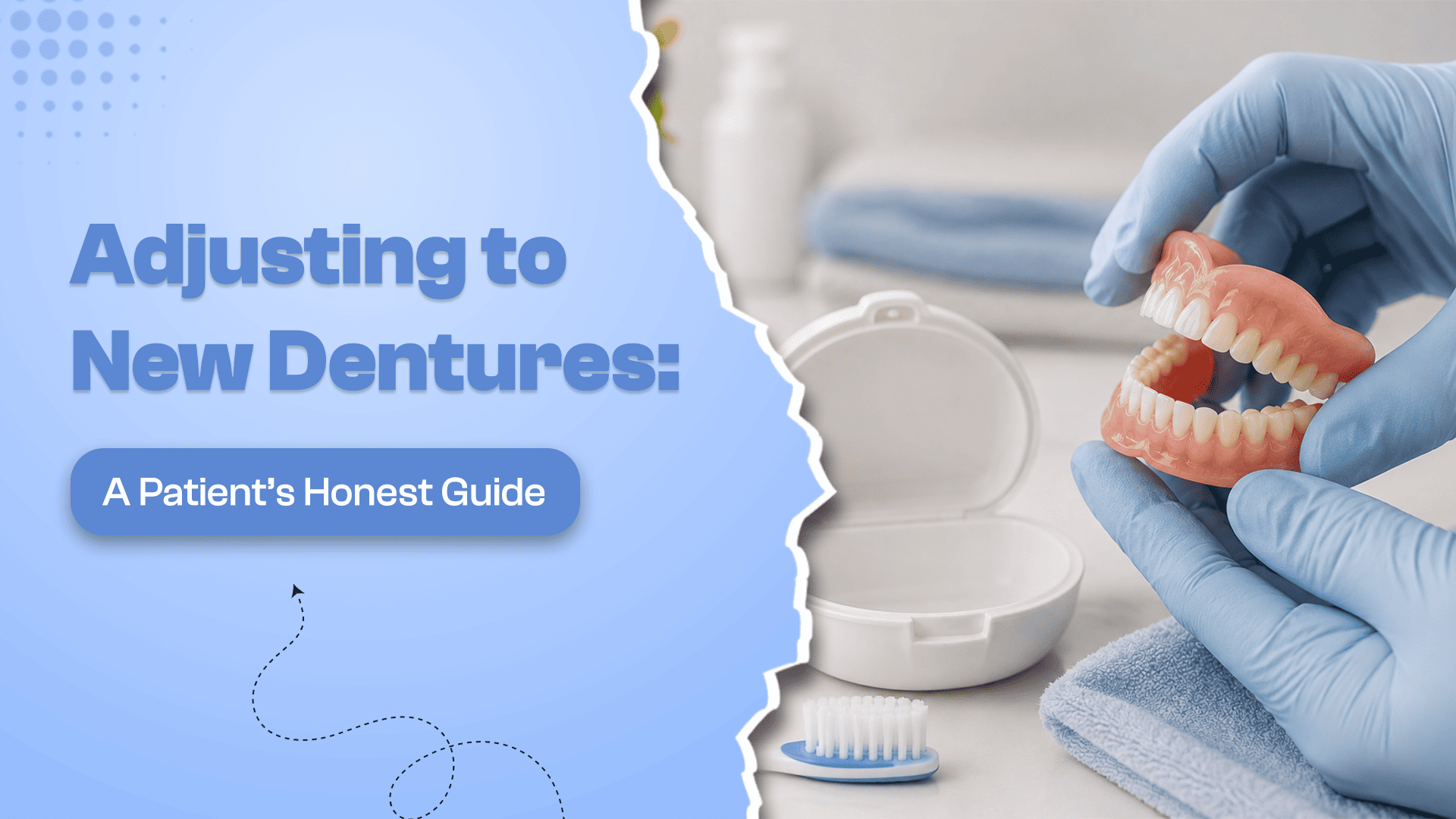
Adjusting to new dentures typically takes 2 to 8 weeks as your gums, tongue, and facial muscles adapt to the new oral appliance, with initial foreign sensations and minor speech shifts (such as slurred “s” or “f” sounds) usually subsiding within 7 to 14 days. During this transition period, temporary changes in chewing mechanics, excess saliva flow, and mild gum sensitivity are normal as muscle memory develops; however, persistent gum pain, severe sore spots, ongoing looseness, or clicking should always be evaluated by a licensed denturist.
What Does Adjusting to New Dentures Feel Like?
Initial Sensations for a First-Time Denture Wearer
For a first-time denture wearer, placing a new prosthetic in the mouth can initially feel bulky. Your tongue and cheek muscles automatically perceive the foreign acrylic base, often triggering an urge to push against it. Mild pressure across the upper arch or lower alveolar ridge is expected as oral tissues adjust to functional forces.
Why Denture Fit and Comfort Evolve Gradually
Oral mucosa is delicate tissue that adapts gradually to continuous contact with polished acrylic. Over the first few days, your neuromuscular system coordinates muscle movements around the prosthetic. As suction retention stabilizes and muscle memory develops, the initial foreign feeling subsides, allowing overall denture fit and comfort to improve naturally.
PRACTICAL TIP
Wear your dentures for short stretches on day one, then gradually extend the time each day. Your muscles need exposure to build coordination, but pushing through pain on day one tends to set back the process, not speed it up.
How Long Does It Take to Adjust to New Dentures?
Days 1 to 3
Bulky sensation, excess saliva, and some speech slurring are at their peak. Stick to soft foods only.
Days 4 to 10
Saliva flow starts to normalize. Your tongue begins finding new reference points for sounds. Sore spots, if they develop, usually appear here.
Weeks 2 to 4
Muscle memory improves noticeably. Most wearers begin feeling comfortable enough to return to soft versions of their regular diet.
Weeks 6 to 8
Full or partial denture wearers typically report chewing mechanics feeling significantly more natural around this point. Dental literature commonly cites 6 to 8 weeks as the standard adaptation window for mastication to normalize.
Months 3 to 6
If you received immediate dentures (placed the same day as extractions), the underlying bone continues reshaping during this period. Your denturist may recommend a reline to maintain a proper fit as tissue shrinks.
Factors Influencing Your Denture Adaptation Timeline
Every patient experiences a unique denture adaptation timeline depending on oral anatomy, tissue thickness, and muscle tone. Some individuals feel comfortable within a few weeks; others require several months to adapt fully. Whether you wear full or partial prosthetics also influences progress. Partial denture wearers typically adapt faster because remaining natural teeth provide familiar sensory feedback. For a closer look at navigating those critical early days, see our first week with new dentures tips.
What Is Normal During the New Denture Adjustment Period?
| Adjustment Experience | Biological Cause | Practical Advice |
| Mild Gum Sensitivity | Tissue adjusting to acrylic pressure | Allow time for natural tissue conditioning |
| Increased Saliva Flow | Temporary reaction from salivary glands | Swallow normally; saliva flow normalizes within a week or two |
| Chewing Uneasiness | Muscles learning new mastication patterns | Eat soft foods and chew on both sides evenly |
| Slight Speech Shifts | Tongue adjusting to revised oral volume | Practise reading aloud in a quiet room for 15 minutes daily |
| Localized Friction | Micro-movements against mucosal tissue | Contact your denturist if sore spots persist beyond a few days |
Adapting Daily Functions: Eating and Speaking
Eating With New Dentures: Habits for Better Stability
Learning to eat with new dentures requires adjusting your chewing technique. Begin with soft foods like eggs, cooked vegetables, yogurt, and soups. Cut food into smaller bites to reduce strain on the alveolar ridge. Chewing slowly and using both sides of your mouth simultaneously prevents the prosthetic from tipping or dislodging during mastication.
Speaking With New Dentures: Tips for Clearer Pronunciation
Speaking clearly with dentures requires your tongue to find new contact points against the prosthetic palate or teeth. Certain sounds like “s”, “f”, and “th” may sound slightly slurred at first. Reading aloud for fifteen minutes daily helps retrain facial muscles and restores speech clarity quickly.
SPEECH TIP
If specific words keep tripping you up, write them down and practise them in isolation before using them in conversation. Many new wearers find tongue-twisters useful for targeting “s” and “th” sounds specifically. The awkward phase genuinely does pass with repetition.
Managing Denture Discomfort, Sore Spots, and Excess Saliva
Why Excess Saliva with New Dentures Occurs
Experiencing excess saliva with new dentures is a natural response. The brain initially interprets the prosthetic as food, signaling salivary glands to produce more fluid. As your mouth recognizes the appliance is permanent, saliva flow returns to normal.
Addressing New Denture Sore Spots Safely
Friction between the acrylic base and sensitive gums can cause new denture sore spots. According to official resources on Oral Health for Seniors in Canada, well-fitting dentures should feel comfortable and support proper chewing without persistent pain or swelling.
⚠ IMPORTANT WARNING
Never attempt home adjustments using household tools, sandpaper, nail files, or any abrasive material. Improper modifications permanently damage the acrylic framework, ruin bite alignment, and typically void any warranty on your prosthetic. If a sore spot is bothering you, remove the denture for relief and call your denturist to schedule an adjustment visit.
Signs Your New Dentures Need Professional Attention
Most discomfort during the first week is part of normal adaptation. There are specific signals, however, that mean you should contact your denturist rather than waiting things out:
- Persistent gum pain or raw sore spots that do not improve after several days.
- Visible gum swelling, redness, or mucosal irritation under the appliance.
- Severe looseness that prevents confident speaking or eating.
- Frequent clicking, slipping, or loss of suction retention.
- Cracks, chips, or rough edges on the acrylic framework.
The Bigger Picture: Denture Wear by the Numbers
If the adjustment period feels isolating, the scale of people going through the same process may offer some perspective.
42M+
Americans projected to wear dentures in 2025, with numbers growing as the population ages
6 to 8 wks
Typical window for chewing mechanics to feel normal, per dental clinical guidance
5 to 7 yrs
Expected lifespan of a well- maintained denture before a reline or replacement is needed
Denture Adjustments and Relines vs Daily Care
Professional Care at Mountview Denture Clinic
Minor pressure areas are common during initial wear, but professional denture adjustments and relines ensure ongoing comfort. Visiting Mountview Denture Clinic in North Vancouver allows a qualified denturist to evaluate your oral tissues and fine-tune your prosthetic fit precisely.
Maintaining a Daily Denture Care Routine
Establishing a consistent daily denture care routine protects both your prosthetic investment and underlying gum health. Clean your prosthetics daily with a soft-bristled denture brush and specialized cleaner, rinsing thoroughly after meals. Leaving dentures out overnight allows your gum tissue to rest and recover, which reduces the likelihood of developing irritation under the appliance. To learn proper cleaning steps and preserve acrylic surfaces, review our guide on how to clean dentures.
Frequently Asked Questions
How long does it take to adjust to new dentures?
Adaptation timelines vary by individual, typically taking two to eight weeks depending on oral anatomy, tissue sensitivity, and muscle coordination. Full dentures generally require a longer adjustment than partial dentures.
Is it normal to experience sore spots with new dentures?
Mild pressure is normal, but localized sore spots that persist should be adjusted by a denturist to prevent tissue irritation. Do not try to relieve them yourself using household tools.
Why do new dentures cause extra saliva production?
Your salivary glands react to the foreign prosthetic as if it were food. Saliva flow gradually stabilizes as your brain adapts, usually within one to two weeks.
How can I make eating with new dentures easier?
Start with soft foods, cut items into small pieces, and chew slowly using both sides of your mouth to maintain balance. Avoid sticky, hard, or chewy textures during the first month.
Can I adjust my new dentures at home?
No. DIY adjustments using household tools ruin bite alignment and can permanently damage the appliance. Call your denturist and schedule a proper adjustment visit instead.
When should I see a denturist for a follow-up?
Schedule an appointment if you experience persistent pain, gum swelling, slipping dentures, or difficulty chewing after the first week. Any mouth sore that does not heal within two weeks also warrants a professional evaluation.
Conclusion
Successfully adjusting to new dentures is a journey that rewards patience and proper care. While initial sensations of bulkiness, speech changes, and minor friction can feel challenging, your mouth gradually adapts to restore comfort and confidence. Remember that persistent pain or looseness should never be ignored. Consult a licensed denturist whenever fit issues arise to ensure your prosthetics continue supporting your daily lifestyle.


