
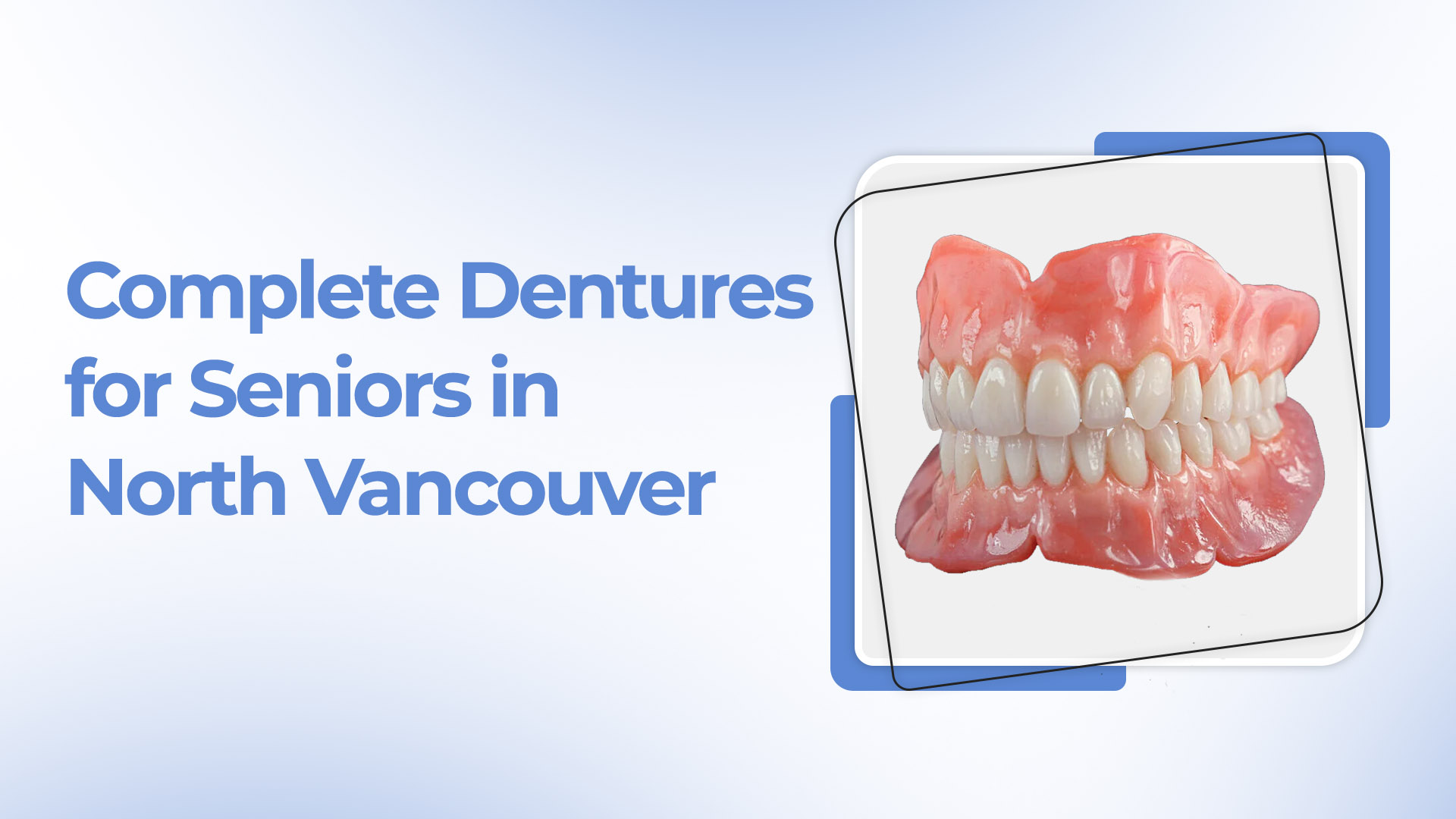
For older adults experiencing total tooth loss, restoring oral health is key to maintaining overall wellness. Choosing complete dentures for seniors in North Vancouver provides custom-made dentures designed to restore natural speech, masticatory function, and facial support, while guiding patients through a multi-stage process for successful rehabilitation.

What Are Complete Dentures for Seniors in North Vancouver?
Restoring Comfort, Chewing, and Natural Appearance
A complete denture is a removable prosthetic designed to replace an entire arch of missing teeth. Crafted from medical-grade acrylic resins, these custom appliances rest on your gum tissue to restore both upper and lower arches. The benefits of complete dentures include enhanced chewing function, clearer pronunciation, and a natural-looking smile that preserves your confidence.
Understanding the Shift to Full Dentures
As we age, issues like severe decay or gum disease may require tooth extractions. Transitioning to full dentures is a practical path to resolving complete edentulism. Fortunately, according to the Government of Canada Oral Health guidelines, only 8 percent of Canadian seniors aged 60 to 79 experience complete tooth loss today. This highlights how modern senior denture options successfully help older adults maintain active, healthy lifestyles.
💡 Good to know
If you still have a few remaining teeth that are beyond saving, your denturist will coordinate with your dentist to schedule extractions before impressions are taken. This ensures your gum tissue heals properly and the final denture fits the actual ridge, not a transitional one.
The Complete Denture Fitting Process for Seniors
Step-by-Step Treatment Journey
Initial Consultation and Oral Health Assessment
The denture fitting process for seniors begins with a comprehensive oral exam. Your denturist examines gum health, oral mucosa, and underlying jawbone structure. Any necessary extractions are scheduled first to ensure oral tissues heal properly before placing a prosthetic base.
Impressions, Trial Fittings, and Final Placement
Next, the denturist takes precise impressions of your alveolar ridge. These measurements help create a wax model for a trial denture fitting to test dental occlusion and aesthetics. Once approved, the final dentures are custom-fabricated and placed.
⚠ Watch out
Do not rush the trial fitting stage. This is your opportunity to flag any concerns about bite comfort or tooth shade before the final acrylic is poured. Changes at the wax stage cost nothing extra; changes after the final denture is fabricated can mean starting over.
Estimated Process Timeline
| Stage | What Happens | Time Required |
| Consultation | Comprehensive exam and treatment planning | 1 Visit |
| Impressions | Taking precise mold of the gums | 1 to 2 Visits |
| Trial Fitting | Testing wax model bite and aesthetics | 1 Visit |
| Final Placement | Fitting finished acrylic dentures | 1 Visit |
| Adjustments | Relieving sore spots and refining bite | 2 to 3 Visits |
Adjusting to New Dentures: What to Expect
Overcoming Initial Soreness and Speech Changes
Feeling minor discomfort while adjusting to new dentures is normal. During the first few weeks, your mouth coordinates the tongue and buccinator muscles to stabilize the appliance. Temporary soreness and increased saliva flow resolve quickly as your oral tissues adapt.

Tips for Practicing Speech and Eating Soft Foods
To ease the transition, eat soft foods and distribute chewing forces evenly. Practice reading aloud to adapt your pronunciation of consonants. Knowing what to expect when getting complete dentures helps you navigate this brief neuromuscular phase.
- Start with soft foods like scrambled eggs, yogurt, mashed potatoes, and fish for the first two weeks. Cut food into small pieces and chew slowly on both sides simultaneously to keep the denture balanced.
- Read a paragraph aloud twice daily. Words with S, F, and TH sounds are the trickiest at first. Improvement is usually noticeable within a week.
- Do not try to manage sore spots yourself with adhesive or over-the-counter gels long-term. Book a follow-up adjustment instead. That is what the adjustment visits are for.
⚠ Important
Do not use denture adhesive as a substitute for a proper reline. If your dentures feel loose after the first year, that is a sign jawbone resorption is happening under the base and a reline is needed. Adhesive masks the problem but does not fix it, and ill-fitting dentures can cause sores and accelerate bone loss.
Why Complete Dentures Matter: Health and Lifespan
Restoring Nutrition and Facial Support
Losing teeth causes facial muscles to sag. Removable full dentures support lips and cheeks, restoring natural facial structure. Additionally, a complete set of teeth allows you to chew nutritious foods, improving digestion and systemic health.
💡 Nutrition note
Research consistently links poor dental function in seniors to reduced protein and fibre intake. Once your dentures are properly fitted and comfortable, gradually reintroduce fibrous vegetables, lean meats, and whole grains. Your digestive health will thank you.
Quality of Life and Longevity of the Prosthetic
A high-quality denture typically lasts five to seven years before needing replacement. While the cost of full dentures for seniors varies by material and coverage, the wellness benefits make it a valuable investment. Many Canadian dental plans cover these essential prosthetics.

Professional Fitting and Maintenance
Visiting a licensed denturist ensures optimal peripheral seal and comfort. Over time, jawbone resorption can cause dentures to loosen. If you are looking for complete dentures for seniors in North Vancouver, choosing Mountview Complete Dentures in North Vancouver guarantees precise clinical care. Regular maintenance at Mountview Complete Dentures in North Vancouver preserves a comfortable fit through hard or soft relines.
Frequently Asked Questions
What are complete dentures for seniors in North Vancouver?
They are custom prosthetics designed to replace a full arch of missing teeth, restoring chewing, speech, and facial support.
How long does the steps in the denture fitting process take?
Typically, the steps in the denture fitting process take four to six weeks, requiring four to five clinical appointments.
Is adjusting to new dentures painful?
Minor soreness is normal at first, but it is temporary. Follow-up adjustments with your denturist will resolve any discomfort.
How do I clean my new full dentures?
Brush them daily with a soft-bristled brush and non-abrasive cleanser, then soak them in water overnight to keep the acrylic hydrated.
What is the cost of full dentures for seniors?
The cost of full dentures for seniors depends on materials and extractions. Insurance or provincial dental coverage can lower out-of-pocket expenses.
Can I sleep with my complete dentures in?
No, remove them overnight to let your oral mucosa rest and prevent bacterial buildup under the acrylic base.
Are complete dentures for seniors in North Vancouver covered by insurance?
Yes, private insurance plans and the Canadian Dental Care Plan provide coverage for eligible seniors.
Reclaiming Your Smile and Health
Choosing complete dentures for seniors in North Vancouver is a positive step toward a healthier, more active lifestyle. Although the initial transition requires a bit of patience, the benefits of restored chewing, clear speech, and a confident smile are well worth the effort.


