
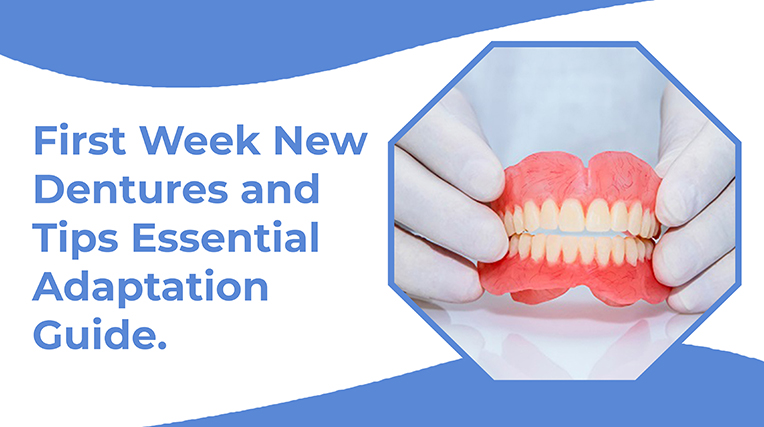
Transitioning to custom prosthetics requires patience as your gums, cheeks, and tongue adjust to structural changes inside your mouth. During the first seven days, mild soreness, temporary speech alterations, increased saliva flow, and chewing adjustments are completely normal. Following the practical first week, new dentures tips help manage sore spots, protect oral tissues, and ensure a smooth transition to daily prosthetic wear.
What to Expect During the First Week With Dentures
Receiving a new full or partial prosthetic marks an important milestone in restoring facial symmetry, bite stability, and smile aesthetics. However, your brain initially recognizes new prosthetic materials as foreign objects. Facial muscles in your cheeks and lips must learn how to hold the appliance securely while your tongue adapts to altered spatial boundaries inside your mouth.
Understanding the denture adaptation timeline reduces anxiety and keeps expectations realistic. Most patients experience peak gum tenderness between days three and five before tissue resilience improves. Seniors across the Lower Mainland can also explore our guide on complete dentures for seniors for additional age-focused insights.
Day-by-Day Denture Adaptation Timeline
| Time Period | What You May Experience | Key Action Steps |
| Days 1-2 | Saliva surge, plastic taste, initial tightness | Stick to soft foods, wear dentures continuously as instructed |
| Days 3-4 | Localized sore spots on gums, minor speech lisp | Warm salt water rinses, practice reading out loud |
| Days 5-7 | Decreasing saliva, improved tongue control | Gradually introduce soft solid foods, note persistent discomfort |
| Weeks 2-4 | Muscle memory established, enhanced stability | Schedule follow-up fitting adjustments with your denturist |
What Is Normal During Your First Week?
Increased Saliva Production
When new acrylic resin bases contact sensitive oral mucosa, your salivary glands temporarily overreact. The brain perceives the prosthetic as food, stimulating excess saliva production. This natural reflex subsides within a few days as sensory nerves adjust to the appliance.
Mild Soreness and Pressure Points
Constant contact between rigid acrylic and delicate gum tissue creates mild tenderness. As chewing pressure shifts across your residual ridges, localized areas may feel tender.
Managing Sore Spots and Gum Irritation
Rinsing your mouth with warm salt water three times daily helps soothe inflamed tissues and promotes mucosal healing. Review our step-by-step guide on how to clean dentures to prevent bacterial irritation. Never attempt to file or adjust your prosthetic at home, because improper modifications ruin structural alignment and invalidate warranties.
💡 Quick Tip
Keep wearing your dentures in the hours before an adjustment appointment, even if a spot feels sore. Your denturist relies on seeing exactly where the tissue is irritated to pinpoint the pressure point, and a denture that has been out for hours makes that much harder to spot accurately.

Minor Speech and Pronunciation Changes
Pronouncing certain sibilant sounds, such as “S” or “F” words, often feels awkward initially. Your tongue requires time to find correct contact points against the prosthetic palate. Reading out loud for fifteen minutes daily accelerates speech recovery.
Feeling That Dentures Are Loose
First-time wearers frequently feel as though their appliance might slip out while speaking. Until facial muscles strengthen and learn to control prosthetic borders, this sensation remains common.

Eating and Speaking With New Dentures
Best Foods During Week One
Begin with soft, non-sticky foods that require minimal biting force: scrambled eggs, warm broths, Greek yogurt, mashed potatoes, cooked squash, applesauce, soft fish, and well-cooked pasta.
Foods to Avoid Initially
Steer clear of hard nuts, tough meats, crunchy raw vegetables, and sticky candies. Biting directly into hard items using front teeth can dislodge appliances and cause tissue trauma.
How to Chew Comfortably
Divide food into small, bite-sized pieces and chew evenly on both sides of your mouth simultaneously. Equal bilateral chewing balances force across your ridges and maintains prosthetic suction.
What Isn’t Normal: When to Call Your Denturist
While mild tenderness is expected, severe pain or deep ulceration requires attention.
Call your denturist if you notice
- Sharp pain rather than mild pressure or tenderness
- Persistent open sores that aren’t healing
- Difficulty swallowing
- Severe jaw stiffness
Clinical adjustments are a standard component of professional prosthetic care. If you experience ongoing discomfort, visiting Mountview Denture Clinic in North Vancouver ensures your prosthetic is precision-tuned for optimal fit and comfort.
Practical First Week New Dentures Tips for Daily Care
Maintaining hygienic daily habits keeps underlying gum tissues healthy and comfortable. Wear your appliances consistently during the day, but give your gums rest overnight unless advised otherwise by your practitioner. Following evidence-based standards from the British Columbia Dental Association guarantees safe, reliable care throughout your recovery.
First Week Denture Success Checklist
- Wear dentures continuously during waking hours as instructed.
- Drink plenty of water to stay hydrated and flush excess saliva.
- Eat soft foods and chew evenly on both sides of your mouth.
- Practice reading aloud to rebuild clear speech patterns.
- Perform daily warm salt water mouth rinses to calm gums.
- Schedule a professional adjustment if sore spots persist beyond five days.
Frequently Asked Questions
Is gum soreness normal during the first week with dentures?
Yes, mild gum soreness and localized pressure points are expected as soft tissues adapt to prosthetic surfaces.
Why do I have so much saliva with new dentures?
Your brain senses new acrylic appliances as foreign objects, causing salivary glands to increase production temporarily.
How long does it take to speak normally with new dentures?
Most patients regain speech clarity within one to two weeks by practicing reading aloud daily.
What should I do if my new dentures cause painful sore spots?
Do not adjust the prosthetic yourself; wear it before your appointment so your denturist can pinpoint pressure spots.
Can I sleep with my new dentures during the first week?
Follow your denturist’s instructions; resting your gums overnight is recommended long-term.
Final Thoughts
Adapting to new prosthetics is a gradual journey that requires patience, proper care, and professional support. Following these practical first week new dentures tips ensures a smooth recovery and helps you enjoy a confident, restored smile.


