
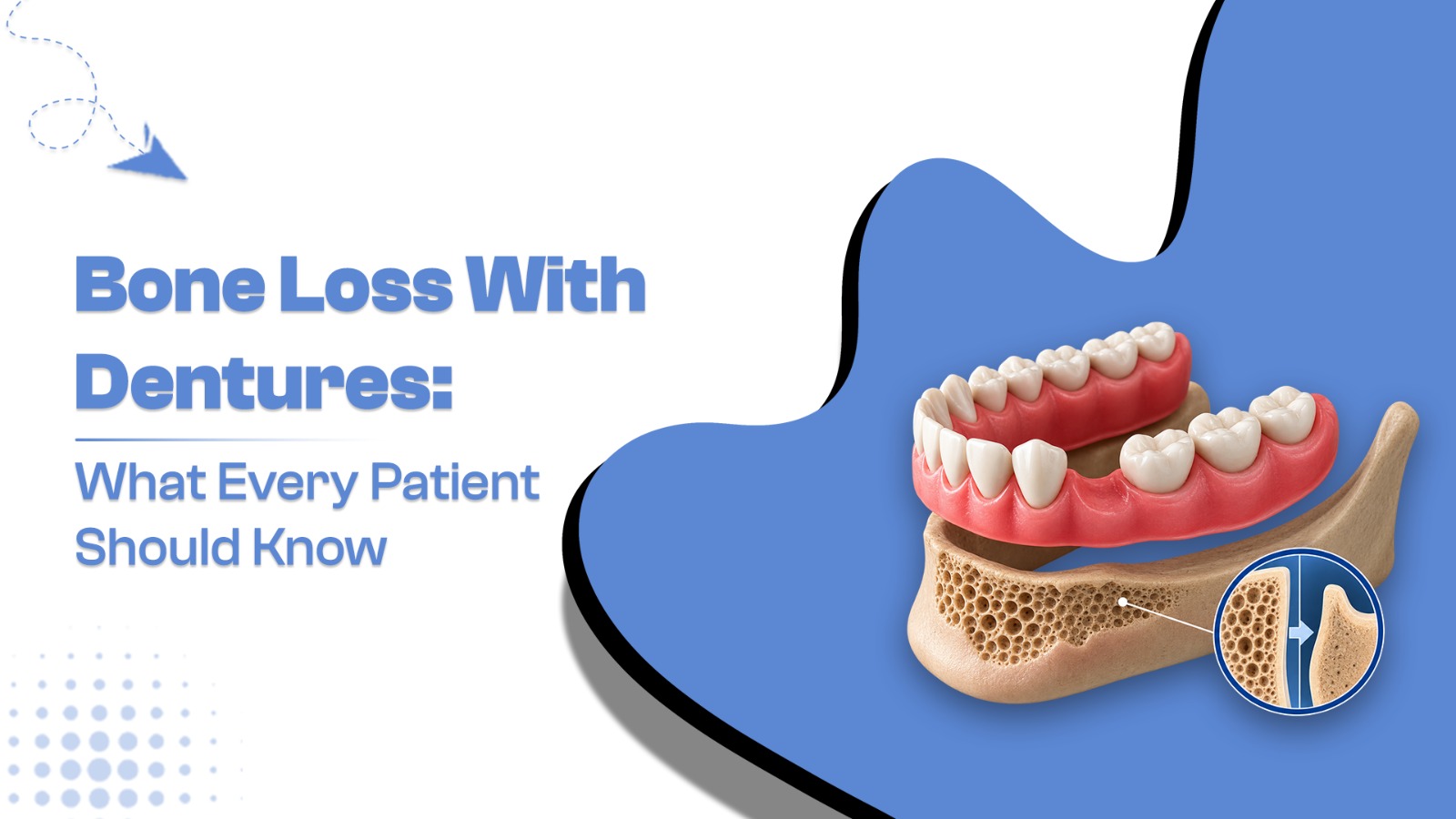
For many adults wearing removable prosthetics, understanding bone loss with dentures is an essential part of maintaining long-term oral health and comfort. Does wearing dentures cause bone loss? Jawbone loss is primarily linked to missing natural tooth roots rather than the prosthetic appliance itself. Because conventional removable prosthetics rest on mucosal tissue without stimulating underlying bone, natural alveolar bone resorption occurs gradually. Regular evaluations, timely denture relines, and implant-supported treatment options help patients manage jaw changes effectively.
Understanding Bone Loss With Dentures
How Tooth Loss Triggers Jawbone Resorption
Natural teeth feature roots embedded within the jawbone, transmitting functional forces during chewing that stimulate bone renewal. When teeth are lost, this natural stimulation ceases. Consequently, alveolar bone resorption occurs, where bone tissue previously supporting teeth gradually shrinks over time.
💡 Worth knowing
Bone resorption is fastest in the first 6 to 24 months after extraction. After that it slows, but it never fully stops. Early action makes the biggest difference.
Natural Bone Structure vs Removable Prosthetics
Traditional full or partial prosthetics restore smiling, speaking, and chewing capabilities. However, because traditional removable dentures rest directly on the alveolar ridge without anchoring into the jaw, they cannot simulate root stimulation. Understanding the distinction between dentures and jawbone loss helps patients set realistic expectations for their prosthetic fit over time.
How Jawbone Changes Affect Denture Fit Over Time
Common Symptoms of Reduced Denture Retention
As the upper maxilla and lower mandible experience subtle structural changes, the supporting gum contour evolves. Consequently, a prosthetic that once fits securely may experience reduced stability and retention. Patients often notice increased movement while talking or eating, requiring excess adhesive or leading to localized sore spots. For guidance on managing initial denture transitions, review our complete dentures guide for seniors.
Key Signs Your Dentures May Require Clinical Assessment
Check yourself: are any of these familiar?
- Unintended slipping or clicking during speech and chewing.
- Persistent sore areas or localized mucosal irritation.
- Increased reliance on commercial denture adhesives.
- Noticeable changes in facial height or bite alignment.
- Trapped food particles underneath the prosthetic base.
- Loose dentures caused by progressive ridge changes.
💡 Do not wait until it becomes unbearable
Many patients delay assessment because the changes feel gradual. But once significant bone height is lost, the treatment pathway becomes more complex and more costly. Persistent soreness or slipping is a reason to book, not something to push through.
Can Facial Changes Occur From Bone Loss?
Progressive bone loss from missing teeth can gradually alter lower facial proportions. As alveolar ridge height decreases, the distance between the nose and chin may compress slightly. Lips and cheek tissues lose structural support, which may result in fine wrinkles or a sunken facial appearance over several years. Proactive oral care helps minimize these aesthetic shifts.
Effective Strategies for Preventing Bone Loss With Dentures
Professional Denture Relines and Adjustments
While denture relines and adjustments cannot regenerate lost bone tissue, they reshape the inner surface of your prosthetic to match current gum contours. A denturist applies fresh acrylic resin to eliminate micro-gaps, improving daily comfort, speech, and stability. Addressing denture fit changes over time prevents friction and excessive pressure on vulnerable ridge areas.
Implant-Supported Dentures for Bone Preservation
For qualified candidates, implant-supported dentures offer significant advantages for bone preservation after tooth loss. By placing biocompatible titanium posts into the jawbone, these prosthetics deliver functional stimulation to surrounding tissues, helping slow jawbone loss while enhancing retention. Patients seeking enhanced stability can explore how snap-in dentures work, including treatment steps and eligibility.
Removable Dentures vs Implant-Supported Overdentures
| Clinical Feature | Traditional Removable Dentures | Implant-Supported Overdentures |
| Primary Support | Rest on gum tissue and underlying alveolar ridges | Supported by titanium implants integrated into jawbone |
| Bone Stimulation | No direct stimulation to underlying bone matrix | Implants transmit chewing forces to stimulate bone |
| Stability Level | Moderate; requires natural suction or adhesives | High retention; snaps firmly onto specialized attachments |
| Long-Term Fit | Requires periodic relines due to ongoing ridge changes | Maintains stable fitting base with superior retention |
Professional Assessment in North Vancouver
Monitoring oral health with a qualified dental professional ensures timely identification of jawbone resorption and denture wear. Visiting Mountview Denture Clinic in North Vancouver allows patients to receive personalized clinical evaluations, precision adjustments, and tailored care. According to patient resources from the Canadian Dental Association, regular clinical visits are vital for evaluating tissue changes and keeping prosthetics fitting comfortably.
Frequently Asked Questions
Why does bone loss happen with dentures over time?
Bone loss occurs primarily because missing natural tooth roots no longer provide mechanical stimulation to the jawbone, leading to natural tissue resorption.
Do dentures cause jawbone loss directly?
No, dentures do not directly cause bone loss. Progressive ridge resorption is caused by missing tooth roots, though poorly fitting dentures can irritate gum tissues.
Can a denture reline restore lost jawbone?
A denture reline fills space created by gum changes to improve fit, but it does not restore or rebuild lost bone tissue.
How to slow jawbone loss after tooth loss?
Practicing good oral hygiene, receiving timely denture adjustments, maintaining regular checkups, or choosing implant-supported prosthetics can help manage jawbone changes.
Can loose dentures caused by bone loss be fixed?
Yes, a denturist can evaluate your mouth to determine whether an adjustment, reline, rebase, or new custom prosthetic is necessary.
How often are regular denture checkups recommended?
Annual clinical assessments are recommended for patients to evaluate prosthetic integrity, tissue health, and jawbone stability.
Conclusion
Understanding bone loss with dentures empowers patients to protect their oral health and smile confidence. While jawbone resorption is a natural reaction to missing teeth, proactive care makes a meaningful difference. Through regular denture checkups, prompt relines, and modern implant solutions, patients can maintain comfort and function for years to come. Schedule an evaluation with a trusted denturist to explore your personalized treatment options today.


