
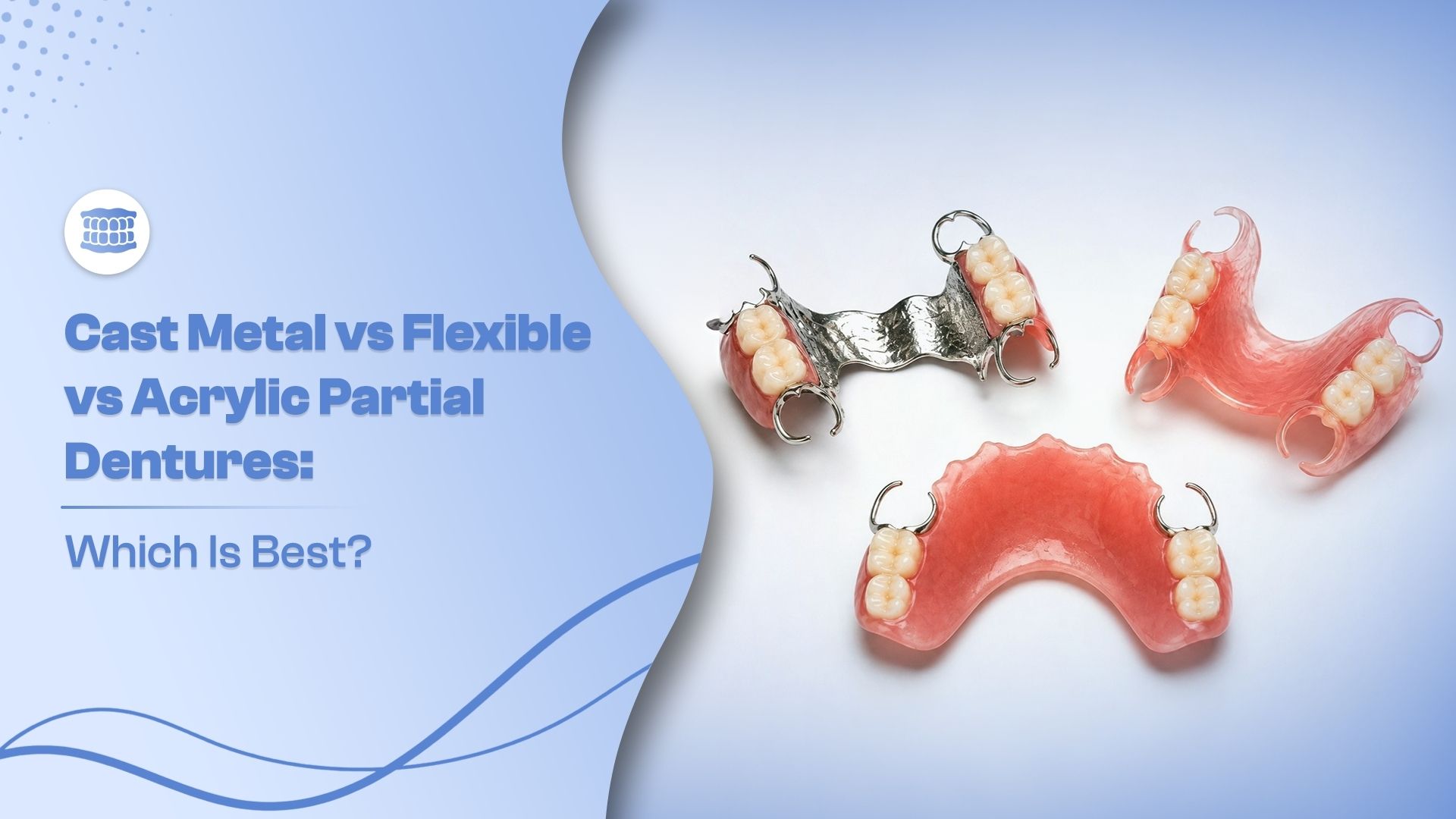
When missing one or more natural teeth, choosing the right prosthetic involves evaluating comfort, stability, and aesthetic appearance. When comparing Cast Metal vs Flexible vs Acrylic Partial Dentures, no single material is universally best for every patient. Cast metal offers exceptional structural rigidity, flexible thermoplastic nylon prioritizes discrete gum-colored aesthetics, and acrylic resin provides an adaptable, economical solution. The ideal choice depends on remaining natural teeth, oral anatomy, chewing demands, and personal budget.
Understanding Removable Partial Denture Materials
Removable partial dentures replace missing teeth while utilizing existing healthy teeth for support and retention. Each material category serves distinct clinical needs. For a comprehensive overview of prosthetic options, review our complete types of dentures guide.
Overview of Partial Denture Categories
Understanding how framework materials interact with oral tissues helps patients make informed decisions during clinical consultations. The table below outlines key structural differences across options.
| Feature | Cast Metal Partial Dentures | Flexible Partial Dentures | Acrylic Partial Dentures |
| Base Material | Medical grade cobalt chromium alloy | Thermoplastic nylon resin | Polymethyl methacrylate resin |
| Support Mechanism | Tooth borne via rests and clasps | Tissue borne mucosal support | Tissue borne with wire retention |
| Aesthetic Clasp Design | Metal clasps (may be visible) | Tissue colored flexible clasps | Wrought wire metal clasps |
| Adjustability | Custom modifications require lab work | Limited repair capability | Highly adaptable for teeth additions |
💡 Tip
Support mechanism matters as much as the material itself. Tooth borne designs move chewing force onto anchor teeth, while tissue borne designs rest more of that force on your gums. Ask your denturist which support type fits the number and location of your remaining teeth.
Cast Metal Partial Dentures
Cast metal partial dentures feature a precision cast framework, typically forged from a strong cobalt chromium alloy. This metal framework supports acrylic tissue base sections and custom replacement teeth, connecting directly to natural anchor teeth.
Structural Benefits of Metal Frameworks
The primary advantage of cast metal partial dentures is their exceptional structural strength and rigidity. Because the metal framework is strong, it can be cast thin and compact, covering minimal palatal or gum tissue for enhanced speaking and tasting comfort.
Key Clinical Advantages
Cast metal frameworks transfer biting forces directly along the long axis of natural anchor teeth via resting clasps. This tooth borne support protects underlying jawbone ridges from excessive localized friction and ensures long term dimensional stability without warping under chewing pressure.
Potential Limitations of Cast Metal
Metal retention clasps can sometimes be visible when smiling, depending on anchor tooth locations. Additionally, fabricating a custom cast framework requires specialized laboratory processing, making initial treatment costs higher than basic acrylic options.
Flexible Partial Dentures
Flexible partial dentures are crafted from thin, light thermoplastic nylon materials such as Valplast. Unlike rigid metallic frames, these appliances flex slightly under functional pressure, adapting gently to natural oral contours.
Aesthetic and Comfort Considerations
The main appeal of flexible partial dentures lies in their subtle flexible denture appearance. Retention clasps are molded directly from pink, tissue shaded resin that blends seamlessly with natural gums, eliminating visible metallic clasps while delivering lightweight daily comfort.
Limitations and Maintenance Factors
Because flexible prosthetics lack rigid metal rests, chewing forces rest primarily on soft mucosal tissues rather than anchor teeth. Furthermore, thermoplastic materials cannot be easily relined or modified if additional natural teeth are lost later.
⚠ Worth Noting
Because a flexible partial is difficult to modify later, it is worth thinking ahead. If you expect to lose more teeth in the next few years, talk to your denturist about how that would affect your flexible partial before committing to this option.
Acrylic Partial Dentures
Acrylic partial dentures utilize a pink polymethyl methacrylate base to support artificial teeth. Wrought wire clasps are often embedded into the acrylic matrix to grip adjacent natural teeth for retention.
Versatility and Adaptability Benefits
Highlighted by acrylic partial denture benefits, these appliances are highly versatile and cost effective. They serve effectively as interim or transitional prosthetics because denturists can easily reline the acrylic base or add new artificial teeth if future extractions occur.
Structural Drawbacks of Acrylic
To prevent fracture without a reinforced framework, acrylic bases must be made thicker and bulkier. This extra volume can feel less natural in the mouth and may decrease tactile sensation compared to thin cast metal designs.
How to Choose the Right Partial Denture Option
Selecting between cast metal, flexible, and acrylic partial dentures requires evaluating your oral health status, aesthetic expectations, and long term functional goals. Patients seeking optimal stability often select metal frameworks, whereas patients prioritizing hidden clasps prefer flexible designs. Consulting a denturist ensures your prosthetic matches your specific anatomical requirements. Patients interested in customized prosthetic solutions can explore Mountview Clinic Partial Dentures in North Vancouver for specialized clinical evaluations.
Coverage Under the Canadian Dental Care Plan
Eligible Canadian residents can access coverage for qualifying partial prosthetics under government oral health initiatives. According to the official Canadian Dental Care Plan Benefits Guide, removable partial cast dentures and partial acrylic dentures are recognized benefit categories subject to preauthorization requirements and frequency limitations. You can review specific CDCP eligibility criteria to determine your plan coverage before scheduling treatment.
Frequently Asked Questions
What is the main difference between cast metal, flexible, and acrylic partial dentures?
Cast metal uses a rigid alloy frame for maximum tooth support, flexible dentures use thermoplastic nylon for discreet clasps, and acrylic dentures use a thicker resin base that allows easy future modifications.
Are cast metal partial dentures more durable than acrylic?
Yes. Cobalt chromium metal frameworks resist bending and fracture far better than acrylic bases, providing superior long term structural longevity under daily chewing forces.
Are flexible partial dentures invisible?
While not completely invisible, flexible clasps are pink and semi translucent, blending far more naturally with gum tissue than traditional silver metal clasps.
Can acrylic partial dentures be repaired or adjusted easily?
Yes. Acrylic resin bonds readily with new material, allowing denturists to perform quick chairside repairs, relines, or tooth additions.
How do I determine which partial denture material is suitable for me?
A professional clinical assessment by a denturist will determine suitability based on remaining teeth, gum ridge support, chewing habits, and personal preferences.
Does the Canadian Dental Care Plan cover all partial denture types?
CDCP provides coverage for specified acrylic and cast metal partial dentures subject to preauthorization, frequency limits, and clinical eligibility standards.
Conclusion
Navigating choices among Cast Metal vs Flexible vs Acrylic Partial Dentures comes down to balancing stability, aesthetics, durability, and budget. Cast metal provides exceptional support, flexible resin offers discreet appearance, and acrylic provides economic flexibility. Consulting a licensed denturist will help you select the ideal removable partial denture tailored to your smile.


