
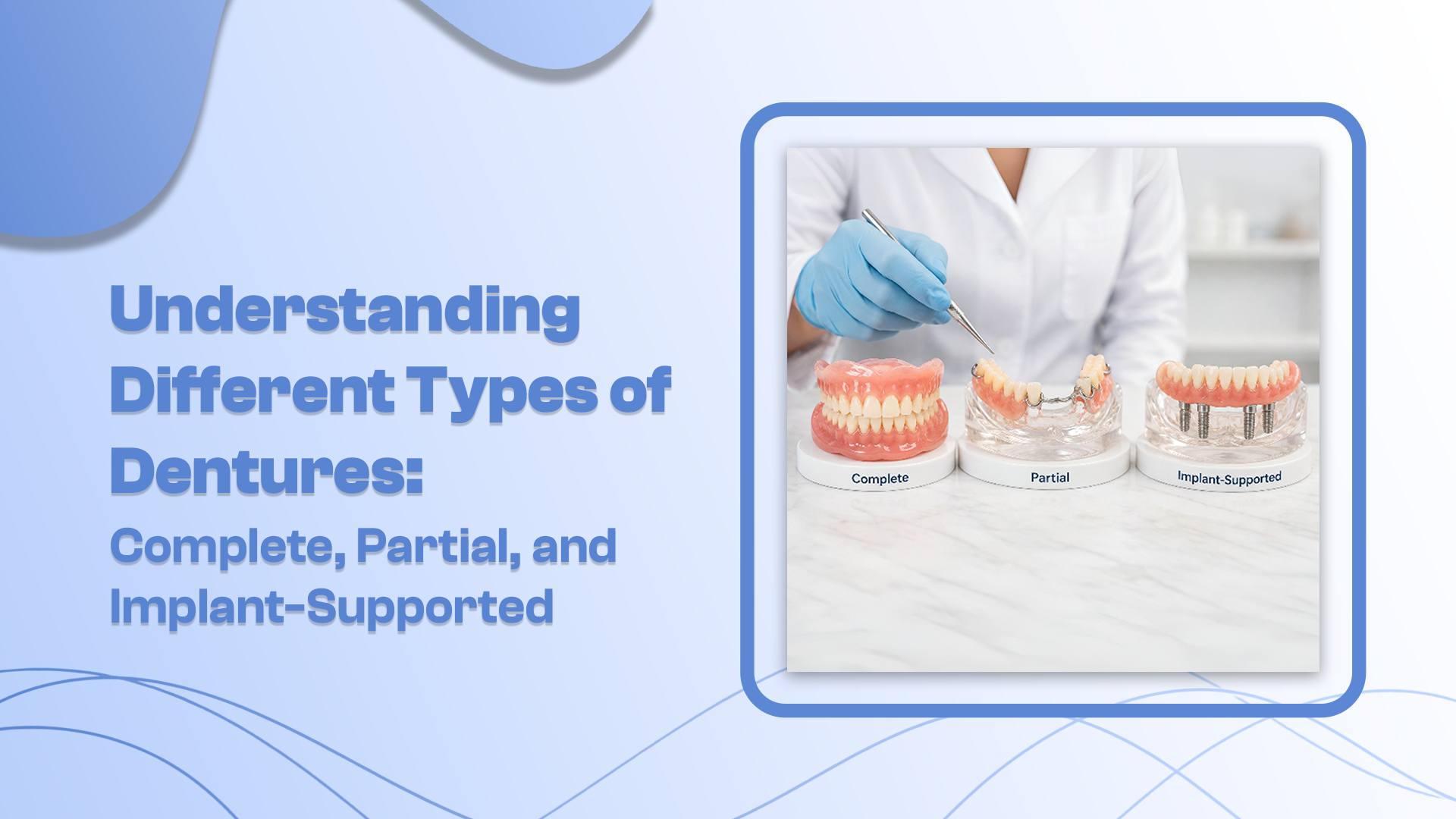
The main types of dentures include complete dentures for replacing a full arch of missing teeth, partial dentures for replacing select teeth when natural teeth remain, and implant-supported dentures that use dental implants for enhanced stability. Selecting the appropriate option depends on individual oral health, remaining teeth, jawbone condition, and personalized treatment goals determined through a professional clinical assessment.
What Are the Main Types of Dentures?
Restoring missing teeth is essential for maintaining chewing function, clear speech, and facial structure. When considering prosthetics, patients can explore several distinct options designed for different levels of tooth loss. At Mountview Denture Clinic in North Vancouver, clinical evaluations help determine which restoration best matches your anatomical needs and lifestyle preferences.
| Denture Type | Generally Used For | Primary Method of Support |
| Complete Dentures | Full arch tooth loss | Oral mucosal tissues and alveolar ridge |
| Partial Dentures | Multiple missing teeth with natural teeth present | Remaining natural teeth and gum tissue |
| Implant-Supported Dentures | Patients seeking maximum stability and retention | Biocompatible titanium dental implants |

Source: Statistics Canada, oral health data
Complete Dentures for Full Arch Tooth Replacement
Complete dentures are designed for individuals who have lost all natural teeth in either the upper or lower jaw. These full arch prosthetics feature custom acrylic teeth set in a skin-toned acrylic base that rests directly on the gum tissue. Upper dentures cover the palate to create natural suction, whereas lower dentures rely on the shape of the gum ridge and surrounding muscles for retention.
How Full Dentures Fit and Adapt Over Time
A successful prosthetic outcome depends on precise custom fitting. Well-crafted full dentures allow patients to chew comfortably and speak clearly. However, because natural jawbone tissue gradually changes shape after tooth loss, periodic clinical adjustments and relines are necessary to maintain proper retention over time. For detailed insights on adapting to full prosthetics, explore our complete dentures guide for seniors. If you need a full arch replacement, tailored Complete Dentures provide a functional, natural-looking solution.
TIP
Most patients need a denture reline every one to two years as the gum ridge changes shape. Booking a checkup at the first sign of looseness helps avoid sore spots and keeps the fit secure.
Removable Partial Dentures for Partial Tooth Loss
When a patient retains one or more natural teeth, removable partial dentures offer an effective method for filling gaps. Partial prosthetics prevent remaining teeth from shifting out of position, preserving proper bite alignment and jaw joint health. Patients seeking custom restorations can receive specialized Partial Dentures designed to blend seamlessly with natural tooth shades.
Material Options for Partial Denture Fabrication
Partial prosthetics can be constructed using different materials depending on structural needs and aesthetic preferences. Acrylic partial dentures feature a lightweight base often used for temporary solutions, while cast metal framework partials utilize strong cobalt-chromium frameworks for superior durability and precise fit.
Clinical Considerations for Partial Dentures
- Retention is achieved using subtle metal or flexible clasps anchored to natural teeth.
- Preserving natural healthy teeth is vital for long-term prosthetic support.
- Daily hygiene for both the partial denture and natural teeth is essential to prevent decay.
Implant-Supported Dentures for Maximum Stability
Implant-supported dentures integrate dental prosthetics with implant dentistry to deliver exceptional retention. Unlike conventional removable prosthetics that rest solely on mucosal tissue, implant-retained systems anchor onto titanium posts inserted directly into the jawbone. Patients interested in high-retention options can learn more about Implant-Supported Dentures during a comprehensive consultation.
Removable Overdentures vs Fixed Implant Solutions
Implant prosthetics exist in different configurations to suit individual goals. Removable implant overdentures snap firmly onto locator attachments, allowing easy daily removal for cleaning. Fixed implant bridges remain permanently secured to implants. A thorough clinical assessment evaluates bone density and overall health to determine candidate suitability for implant therapy.
Types of Dentures in Canada and CDCP Coverage
Navigating prosthetic options in Canada often includes reviewing financial assistance programs. The Canadian Dental Care Plan provides coverage for eligible residents requiring essential removable prosthodontic services. According to official guidelines on Government of Canada CDCP coverage, qualifying patients may receive coverage for complete dentures, partial dentures, immediate dentures, and relines under specific preauthorization rules.
CDCP Exclusions for Implant-Supported Prosthetics
While the Canadian Dental Care Plan supports conventional removable prosthetics, it is important to note key exclusions. Under current program regulations, implant-supported dentures and associated implant placement procedures are not covered. Patients interested in exploring program details can read our guide on Canadian Dental Care Plan coverage for dentures.
Before you book
CDCP coverage for removable dentures usually requires preauthorization from Sun Life before treatment starts. Confirm your eligibility and get the paperwork approved first, since claims submitted without preauthorization can be denied.
How to Choose the Right Denture Option
Selecting the proper prosthetic involves evaluating multiple clinical factors rather than relying on a generic choice. A qualified denturist assesses your oral anatomy, remaining natural teeth, jawbone density, and personal comfort requirements. Factors such as chewing performance, budget, maintenance preferences, and implant candidacy guide the creation of a personalized treatment plan.
Daily Care and Long-Term Maintenance
Maintaining your prosthetic ensures long-term oral hygiene and comfort. Clean your dentures twice daily with a soft-bristled denture brush and mild non-abrasive cleanser. Remove removable prosthetics overnight to allow gum tissues to rest. Regular annual checkups allow your denturist to examine tissue health, adjust fit, and perform necessary maintenance.
Frequently Asked Questions
What are the main types of dentures available?
The primary types are complete dentures for full tooth loss in an arch, partial dentures for replacing select missing teeth, and implant-supported dentures anchored by dental implants for enhanced stability.
What is the difference between complete and partial dentures?
Complete dentures replace an entire arch of teeth when no natural teeth remain, resting on gum tissue. Partial dentures replace several missing teeth while anchoring onto surviving natural teeth.
Are implant-supported dentures covered under the CDCP in Canada?
No, current Canadian Dental Care Plan rules exclude implant-supported dentures and implant placement procedures. CDCP coverage focuses primarily on conventional removable complete and partial prosthetics.
How long do conventional removable dentures usually last?
Conventional dentures typically last five to seven years. Because jawbone structure evolves over time, periodic relines or adjustments are necessary to maintain proper fit and stability.
What are immediate dentures and when are they used?
Immediate dentures are placed immediately following tooth extractions so patients are not without teeth during healing. As gums heal and reshape, adjustments or relines are required.
Conclusion
Choosing among the different types of dentures is a foundational step toward restoring your smile, chewing function, and quality of life. Whether complete dentures, custom partials, or stable implant-supported prosthetics are right for you, receiving expert clinical guidance makes all the difference. Schedule a personalized consultation at Mountview Denture Clinic in North Vancouver to discover the ideal denture solution for your needs.


